

What Is Christmas All About?
Every year around this time, the same questions surface.
For many people—especially those outside the church—Christmas can feel confusing. Is it a religious holiday or just a cultural one? Is it about family and nostalgia, or shopping and obligation? Why does it seem to bring out both generosity and exhaustion, joy and stress?
For others, particularly sincere Christians, Christmas raises a different concern altogether: Is celebrating Christmas biblical? Is it pagan? Is it syncretic? Is it something followers of Jesus should avoid?
At Frontier Church Longmont, we believe these are fair questions. They deserve honest, thoughtful answers—not reactions driven by fear, tradition, or cultural pressure. Our goal isn’t to defend a holiday for its own sake, but to get to the heart of why we—and many Christians throughout history—embrace the Christmas season.
So… what is Christmas all about?
Is Christmas Commanded—or Condemned?
First, lets be clear, the Bible does not command Christians to celebrate the birth of Jesus.
But it also does not condemn or prohibit it.
Scripture is clear that anytime Jesus is honored, remembered, proclaimed, and glorified, something good is happening. Christians celebrate many meaningful things that are not explicitly commanded in Scripture—weddings with rings, church anniversaries, commissioning services, even the way we structure weekly worship gatherings.
The guiding question is not simply, “Is this mandated?”
It’s this:
Does this point us toward Jesus?
Does this help us love God and others more faithfully?
When Christmas does that, it aligns deeply with the heart of the Christian faith.
For Christians who are concerned about syncretism or compromise, this matters. Celebrating Christmas is not about blending Christianity with paganism—it’s about proclaiming Christ. When Jesus is the focus, remembering His coming into the world is an act of worship, gratitude, and hope.
Christians are not celebrating a date on a calendar. We are remembering an event: God entering human history.
The Secular Side of Christmas — Heart Without the Soul
Can Christmas be secular? Absolutely.
When Christmas becomes centered on consumerism, pressure, debt, exhaustion, and forced cheer, it loses its soul. Many people feel this deeply. The season promises joy but often delivers stress. It offers togetherness but sometimes highlights loneliness.
And yet, even in its secularized form, Christmas still carries something unmistakable.
The ideas often associated with “Christmas spirit”—joy, peace, hope, kindness, generosity—are not random cultural inventions. They are deeply Christian virtues. They flow from the life and teachings of Jesus and from the work of the Holy Spirit shaping human hearts.
In other words, much of what people love about Christmas is Christian at its core—even when Christ Himself is missing.
I often feel like once a year the world briefly catches up with what followers of Jesus are called to live year-round: loving others well. People become more generous. Old grudges are set aside. Relationships matter a little more. There’s a shared sense—however fragile—that the world could be better than it is.
The secular version of Christmas often keeps the heart—kindness, generosity, hope—but loses the soul. For Christians, that soul is Jesus Himself. He is the source those virtues flow from, not just seasonal feelings we try to manufacture.
Christian Soul In Familiar Traditions
Many Christmas traditions that feel purely cultural actually have deep Christian roots.
Take Santa Claus, for example. Behind the modern caricature is St. Nicholas, a 4th-century Christian bishop known for radical generosity, especially toward the poor and vulnerable. The tradition of secret gift-giving flows directly from his Christ-shaped compassion.
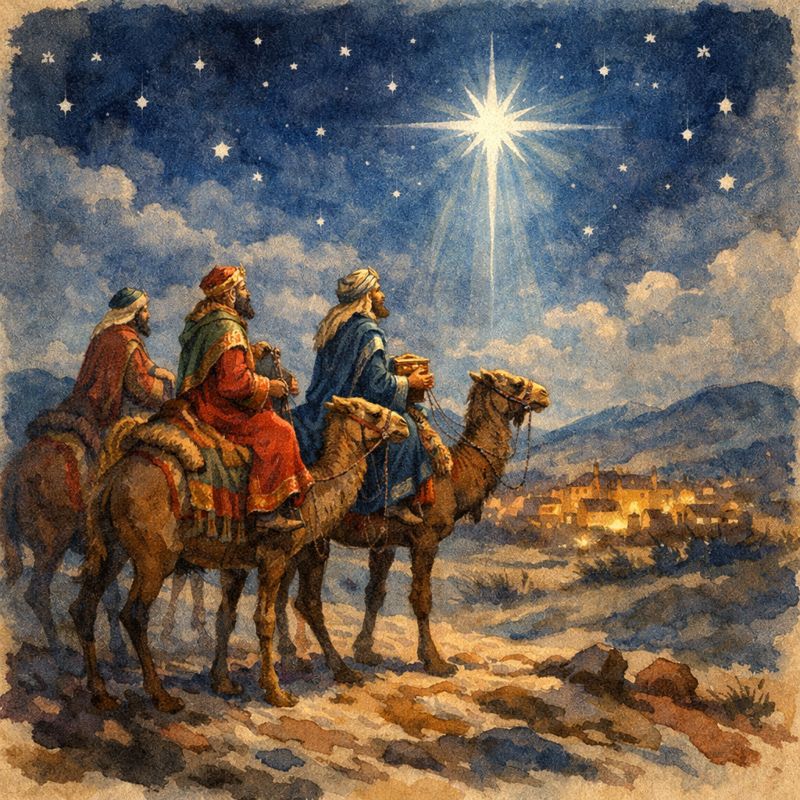
Gift giving itself echoes the Christian story: God giving the ultimate gift in Jesus, and the wise men bringing gifts not out of obligation, but worship. When gifts are given to bless others—to see joy in them rather than impress them—they reflect something deeply biblical.
Hospitality during Christmas—opening our homes, sharing meals, welcoming others—is central to the story of Jesus, who entered the world through the hospitality (and lack thereof) of ordinary people. Christians see hospitality not as entertaining, but as loving others well.
Even candy canes, often dismissed as meaningless, were historically used as a teaching tool—shaped like a shepherd’s staff, symbolizing Jesus as the Good Shepherd.
And Christmas lights? They may feel purely decorative, but Christians have long associated light with hope, truth, and God’s presence. Jesus called Himself “the light of the world” and invited His followers to reflect that light in dark places. Stringing lights through the darkness of winter unintentionally mirrors a deeply Christian truth: light shines, even when nights feel long.
None of these traditions save anyone. But they can serve as signposts—small reminders pointing toward a much bigger story.
An Invitation to Explore the Way of Jesus
So what is Christmas all about?
It’s about good news.
It’s about great joy.
It’s about peace offered to a restless world.
It’s about God choosing to be with us.
The Christian Scriptures describe it this way:
“Do not be afraid. I bring you good news that will cause great joy for all the people. Today in the town of David a Savior has been born to you; he is the Messiah, the Lord.”
At Frontier Church Longmont, our hope isn’t simply that people would “celebrate Christmas,” but that they would discover the way of Jesus—the way of love, mercy, justice, forgiveness, and hope that doesn’t disappear when the decorations come down. We hope and desire for people to know the good news and to experience the great joy that God intends through the coming of Jesus.
If you’re curious, skeptical, wounded by church, or simply wondering if faith can be more than obligation or tradition, we’d love to explore that with you. No pressure. No expectations. Just honest conversation, shared life, and a community learning how to live the way of Jesus together.
That, for us, is what Christmas points toward.
And you’re welcome to explore it with us.